
Getting started with Momentum AI – crypto investment basics, risk limits, and a clear first-step plan.
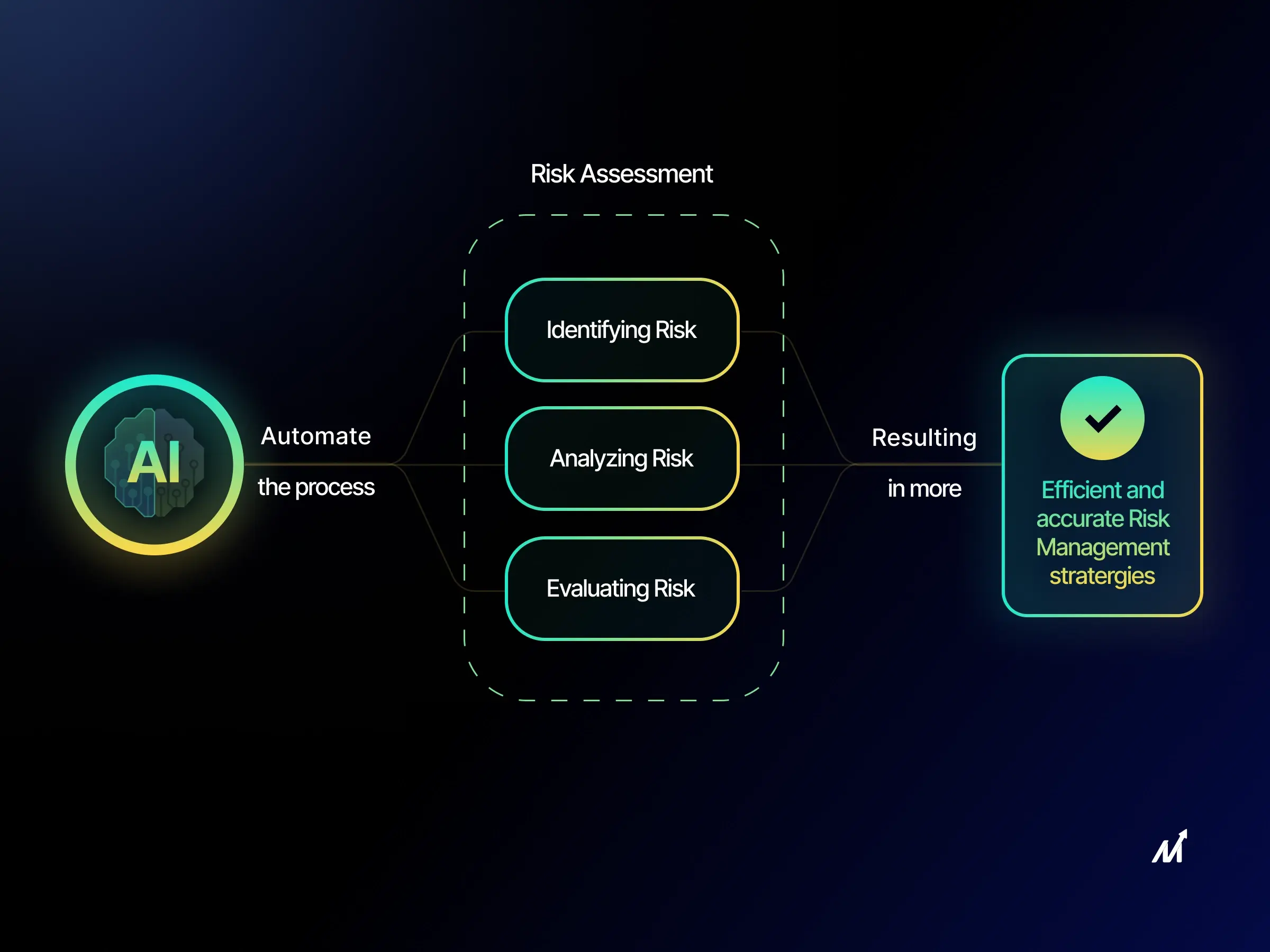
Define a strict capital allocation rule before any action. A common method is to commit no more than 1-5% of your total liquid net worth to this asset class. This ceiling is non-negotiable and protects your core financial stability from the sector’s inherent volatility.
Structure your entry using a systematic dollar-cost averaging approach. Automate purchases of a fixed dollar amount on a weekly or monthly schedule, regardless of short-term price fluctuations. This discipline removes emotion, averages your entry price over time, and builds a position gradually instead of attempting to time the market.
Establish explicit exit triggers for every position. These are not predictions but predefined rules. For instance, sell a specific holding if it falls 25% from your purchase price, or rebalance the portfolio quarterly to its original weightings. This mechanical process enforces accountability and prevents emotional attachment to losing trades.
Concentrate on assets with substantial daily trading volume–typically exceeding $100 million. High liquidity ensures you can enter and exit positions without significantly impacting the market price. Avoid obscure tokens with thin order books, as they present heightened danger of being unable to sell during a downturn.
Your initial focus should be on the two largest assets by market capitalization, which together often represent over 60% of the total sector value. This provides foundational exposure to the market’s direction with significantly lower idiosyncratic danger than smaller, unproven projects. Expansion beyond this core should be deliberate and slow.
Momentum AI Crypto Investing: Basics, Risk Limits, First Steps
Define a maximum loss per trade, such as 1-2% of your total capital. This single rule prevents any single position from critically damaging your portfolio.
Allocate no more than 5-10% of your funds to the entire digital asset class. Within that, distribute capital across a minimum of five different projects to avoid concentration.
Automated systems, like those from https://momentum-ai-canada.com, execute based on predefined algorithms, removing emotional decisions. These tools scan for assets with strong recent price appreciation and trading volume.
Backtest any strategy across multiple market cycles–bull and bear–before committing real funds. Historical performance, while not a guarantee, reveals a system’s robustness.
Set hard exit points for every entry. A stop-loss order should trigger automatically at a price 10-15% below your purchase, while take-profit targets can be set at ratios of 2:1 or 3:1 relative to the potential loss.
Use a dedicated platform for tracking all positions and their performance metrics. Weekly portfolio reviews are mandatory to assess adherence to your rules.
Never reinvest profits from a winning trade into a new position without adjusting your risk parameters. Each new commitment must be calculated from your updated core capital.
How to Set Up Your First AI Trading Bot: A Step-by-Step Walkthrough
Select a platform like 3Commas, Pionex, or HaasOnline. Verify its compatibility with your preferred exchange–Binance, Coinbase Pro, or Kraken are common choices.
Account Configuration & Security
Generate a new API key from your exchange account. Restrict this key to „Read” and „Trade” permissions only; never enable „Withdraw.” Input this key and secret into your chosen bot platform. Activate two-factor authentication on both services immediately.
Define your operational parameters. Specify a market pair, such as ETH/USDT. Allocate a concrete sum from your portfolio for the automated system, e.g., $500. This capital should be expendable.
Strategy Selection and Calibration
Choose a pre-built logic, like a Grid Bot or DCA (Dollar-Cost Averaging) protocol. For a Grid Bot, set your price ceiling and floor based on the asset’s 30-day volatility range. Establish a grid count; 25 levels offers a balance between frequency and profit per trade.
Configure automatic stop parameters. Set a trailing stop-loss at 7% below the highest achieved price after an entry. Program the bot to halt all activity if total portfolio drawdown reaches 15%.
Initiate the system with a paper trading or minimal-fund trial for 72 hours. Monitor its decision logs against actual market performance. Adjust one variable at a time–like grid spacing or stop percentage–based on this observed data.
Defining Your Capital Allocation and Daily Loss Boundaries
Commit a fixed percentage of your total speculative funds to each position, never exceeding 2%. For a $50,000 portfolio, this caps a single trade at $1,000.
The 1% Daily Drawdown Rule
Set a firm maximum loss of 1% of your total portfolio value for any single trading session. If your portfolio is $50,000, your daily stop-loss is $500. Once this loss is hit, cease all trading activity for the remainder of the day.
Calculate your position size based on this daily limit. If your daily loss ceiling is $500 and your trade’s stop-loss is set 5% below entry, your maximum position size is $10,000 ($500 / 0.05). This directly links trade size to your predetermined exit point.
Implementing a Tiered Allocation Framework
Segment your capital into three tiers: 70% for core, long-term holdings; 20% for active, medium-term trades; and 10% for high-conviction, short-term opportunities. Rebalance this structure quarterly. Never allow losses from the active 30% to encroach on the core 70% allocation.
Use automated stop-loss orders on every active trade, placed immediately after entry. Adjust these orders only to lock in profit, never to widen the loss allowance. Track your daily results in a journal, reviewing weekly for breaches in your boundaries.
FAQ:
What exactly is „momentum” in AI crypto investing?
In this context, momentum is a strategy that uses artificial intelligence to identify cryptocurrencies showing strong upward or downward price trends. AI algorithms analyze vast amounts of market data—like trading volume, price movements, and social sentiment—to detect these trends much faster than a human could. The core idea is to buy assets that are gaining value and sell those that are losing value, aiming to profit from the trend’s continuation.
How do I set my first risk limits before investing?
Begin with two clear rules. First, decide the maximum percentage of your total investment capital you are willing to lose. A common starter limit is 1-2% per trade. Second, set a stop-loss order for every position you open; this automatically sells the asset if its price falls to a specific level, preventing larger losses. Never invest money you cannot afford to lose entirely, as crypto markets are volatile.
Can AI tools guarantee profits in crypto trading?
No, they cannot. AI tools are sophisticated analysis systems, not crystal balls. They process data and identify probabilities, but the market remains unpredictable. External news, regulatory changes, or broad economic shifts can override any AI prediction. Relying on any tool for guarantees is a major risk. These tools should inform your decisions, not make them for you without your oversight.
What’s a practical first step to use AI for crypto analysis?
A practical first step is to use a reputable platform that offers AI-driven analytics or screening tools, often available as part of an exchange’s pro features or from independent data providers. Start by observing. Use the AI to scan the market for assets matching your basic criteria, like high volume or positive momentum signals. Then, manually research those assets to understand the technology and news behind them before considering any investment.
What’s the biggest mistake beginners make with AI investing strategies?
A frequent mistake is over-trusting the technology and abandoning basic judgment. Beginners might see a strong AI „buy” signal and invest without checking basic facts: is the project legitimate, or is it a hype-driven token with no real use? Another error is reacting to every new signal, leading to excessive trading and high fees. The AI is a data filter; your critical thinking must be the final decision-maker.
I keep hearing about „momentum” in crypto AI investing. What does it actually mean in simple terms, and how do the AI tools measure it?
In this context, momentum is the idea that assets moving upward in price tend to continue rising, and those falling tend to keep dropping, at least for a short period. AI tools for crypto momentum investing don’t just look at simple price increases. They analyze complex datasets to identify and quantify this trend strength. This typically involves calculating specific metrics over set time frames, like the Rate of Change (ROC) or moving average convergences. The AI might process trading volume, social media sentiment, or on-chain transaction data to confirm whether a price move has underlying strength or is just noise. The system then generates a score or signal indicating the momentum’s power and direction, helping to inform buy or sell decisions.
Reviews
Emma Wilson
Darling, your risk limits seem based on historic volatility. But in a market where a meme coin can gain 10,000% on a tweet, isn’t that math just a comforting fairy tale? How do you set a ‚limit’ on pure, unadulterated mania? Do you have a personal rule for when to ignore your own system and just run?
Aria Kim
My bookshelf, arranged by colour, disapproves of this new hobby. The sheer velocity of ‘momentum’ in this space seems to require a personality transplant I’m unwilling to get. So, you’re telling me to chase digital assets that fluctuate based on Elon Musk’s tweet drafts, but to set ‘risk limits’? Charming. My first step was calculating how many first editions I could buy with the sum I’m supposedly comfortable losing. The volatility chart looks less like a financial instrument and more like my heartbeat during a surprise phone call. Frankly, the ‘AI’ part is the only one that appeals—a silent, non-judgmental algorithm that doesn’t expect me to network at a conference. I’ll allocate precisely the amount I’d spend on therapy for my newfound FOMO. To the moon, quietly, from my sofa.
James Carter
Gentlemen, a thought for those applying momentum logic to crypto. Once your initial risk parameters are set, how do you personally determine the point where a winning trade’s momentum is statistically exhausted versus merely pausing? I find that line is where true discipline separates itself from basic theory.
Talon
Hey, saw you’re reading this too. My head’s spinning a bit with all the risk talk. Where’s your personal line with crypto—like, a hard percentage of your savings you’d never cross, no matter the hype? And for those first steps, are you leaning toward a big name coin to start, or something smaller? Really curious how others are setting their own rules before hitting buy.